Previous
Next
About ADHD - girl in school classroom

About ADHD

Find answers to your questions about ADHD

Attention-deficit/hyperactivity disorder (ADHD) is a common neurodevelopmental condition that affects children and adults worldwide. It is usually first diagnosed in childhood and often lasts into adulthood. It is characterized by a persistent pattern of inattention and/or hyperactivity-impulsivity that can interfere with daily activities and relationships.

People with ADHD experience an ongoing pattern of the following types of symptoms:

  • Inattention—having difficulty paying attention
  • Hyperactivity—having too much energy or moving and talking too much
  • Impulsivity—acting without thinking or having difficulty with self-control

Some people with ADHD mainly have symptoms of inattention. Others mostly have symptoms of hyperactivity-impulsivity. Some people have both types of symptoms.

There is no single test to diagnose ADHD, and many other problems, like anxiety, depression, sleep problems, and certain types of learning disabilities, can have similar symptoms. Because of this, a thorough evaluation by a healthcare professional is necessary to determine the cause of the symptoms.

Currently available treatments may reduce symptoms and improve functioning in ADHD patients. Treatments include medication, psychosocial interventions, education or training, or a combination of treatments.

There are many treatment options, and what works best can depend on the individual. It is recommended that patients work with healthcare providers to find the best treatment plan.

Recent studies link genetic factors with ADHD. Scientists are studying cause(s) and risk factors in an effort to find better ways to manage and reduce the chances of a person having ADHD. Many cause(s) and risk factors for ADHD are unknown, but current research shows that genetics plays an important role. In addition to genetics, scientists are studying other possible causes and risk factors.

ADHD treatment

Treatments for ADHD may include medication, psychosocial interventions, or a combination of methods. ADHD education, skills training and parent training, and school accommodations can all play an important role in an ADHD treatment plan. Doctors and patients can work together to find the best treatment plan and determine whether medication is necessary to manage ADHD symptoms.

In many cases, ADHD is treated with a combination of behavioral therapy and medication. Treatment plans will include regular monitoring, follow-ups, and making changes, if needed, along the way. It is important to talk to your doctor and communicate any questions or concerns you may have.

FDA-approved medications for the treatment of ADHD include stimulants and non-stimulants. Stimulant ADHD treatments fall into three categories: methylphenidate, amphetamine, and norepinephrine-dopamine-serotonin reuptake inhibitor. Non-stimulant ADHD treatments include alpha-2 adrenergic agonists, noradrenaline reuptake inhibitors.

A healthcare prescriber's decision to prescribe an ADHD medication depends on a few key factors:

  • The patient’s individual needs
  • Prior experience with ADHD medications
  • Health conditions the patient may have or other medications the patient may be taking

Alpha-2 adrenergic agonists and noradrenaline reuptake inhibitors are two types of non-stimulant medications that are used in the treatment of ADHD.

Non-stimulants may be prescribed to a patient when stimulant medications have either not been effective or have been shown to cause unwanted side effects for the patient. Doctors may consider using non-stimulants in patients with certain conditions.

Some patients respond well to treatment with a non-stimulant medication alone, while others are prescribed a combination of stimulants and non-stimulants. It is important to work with your healthcare provider to find the medication that works best for you or for your child.

Savings & Support

We want to make getting ONYDA XR as easy and inexpensive as possible! Learn about your options below!

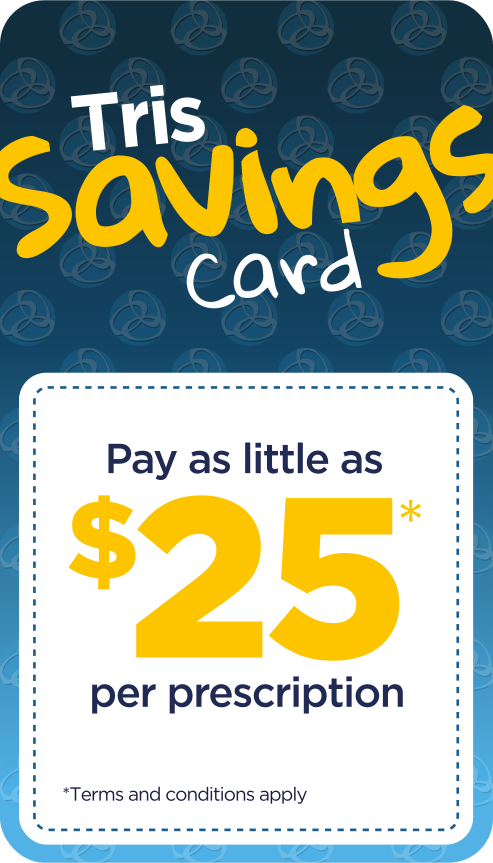
ONYDA Savings card
Eligible patients pay $25 per month with the Tris Savings Program

8 out of 10 of commercially covered patients pay $25

Get Savings Card

Or text TRIS to TRIS4U (874748) for a Mobile Savings Card§

ScriptsRX Logo
Eligible commercially-insured patients
pay as little as $15

You’ll also receive free delivery, automatic refills, same-day processing, and ongoing support.

Learn More

Stay in the know with all things ONYDA XR

Join the ONYDA XR Community to receive monthly emails about ONYDA XR and resources to help support your child's ADHD treatment journey.

* Terms and Conditions apply.
** Mobile Terms and Conditions: TrisSavingsCard.com/terms. Message data rates may apply.

REFERENCES: 1. US Department of Health and Human Services. National Institutes of Health. Attention Deficit/Hyperactivity Disorder in Children and Teens: What you need to know. NIH Publication No. 21-MH-8159. 2021. 2. Faraone SV, Bellgrove MA, Brikell I, et al. Attention-deficit/hyperactivity disorder. Nature reviews disease primers. (2024); 10:11: https://doi.org/10.1038/s41572-024-00495-0

BACK TO TOP arrow up

Important Safety Information

ONYDA XR is a prescription medicine used for the treatment of Attention Deficit Hyperactivity Disorder (ADHD) alone or with certain other ADHD medicines in children 6 years of age and older.

It is not known if ONYDA XR is safe and effective in children under 6 years of age.

See Additional Important Safety Information.

APPROVED USE

ONYDA® XR (clonidine HCI) is a prescription medicine used for the treatment of Attention Deficit Hyperactivity Disorder (ADHD), alone or with certain other ADHD medicines, in children 6 years of age and older. It is not known if ONYDA XR is safe and effective in children under 6 years of age.

Important Safety Information

Do not take ONYDA XR if you are allergic to clonidine.

Before taking ONYDA XR, tell your healthcare provider if you have kidney problems; low or high blood pressure; a history of passing out (syncope); heart problems (including slow heart rate or rhythm problems); had a stroke or stroke symptoms; or had an allergic reaction after taking clonidine through the skin (patch). Tell your healthcare provider if you are pregnant, planning to become pregnant, or breastfeeding. It is not known if ONYDA XR may harm an unborn baby. ONYDA XR passes into breast milk and may cause sleepiness, floppy muscles, or breathing problems in breastfed babies. A pregnancy registry is available at 1-866-961-2388 or womensmentalhealth.org/adhdmedications.

Tell your healthcare provider about all medicines you take, including prescription and over-the-counter medicines, vitamins, and herbal supplements. ONYDA XR may interact with medicines for depression, ADHD, heart or blood pressure conditions, medicines that cause sleepiness, or other clonidine-containing medicines.

What to avoid while taking ONYDA XR?

Avoid dehydration and overheating, which may increase the risk of passing out.

Do not drive, operate machinery, or perform dangerous activities until you know how ONYDA XR affects you, because it may cause sleepiness and tiredness that can slow reaction times.

Avoid alcohol or other medicines that cause sleepiness or dizziness unless discussed with your healthcare provider.

Do not suddenly stop ONYDA XR. Stopping suddenly may cause rebound high blood pressure and withdrawal symptoms. Contact your healthcare provider before stopping treatment. If vomiting prevents you from taking ONYDA XR, contact your healthcare provider because rebound hypertension may occur.

Possible side effects

ONYDA XR may cause serious side effects including:

Low blood pressure and slow heart rate, which may increase the risk of passing out. Your healthcare provider should check your heart rate and blood pressure before and during treatment.

Sleepiness and tiredness that may slow reaction times.

Rebound high blood pressure and withdrawal symptoms after sudden stop (including headache, increased heart rate, nausea, flushing or warm feeling, lightheadedness, chest tightness, nervousness, or anxiety).

Allergic reactions. Stop taking ONYDA XR and seek medical help immediately if you develop rash, hives, or swelling of the eyes, face, lips, or tongue, especially if you previously had an allergic reaction to clonidine patch.

ONYDA XR may cause fertility problems in females and males, which may affect the ability to have a child. Talk to your healthcare provider if this is a concern.

Most common side effects when used alone:

Sleepiness/tiredness, nightmare, constipation, irritability, trouble sleeping, and dry mouth.

Most common side effects when used with other ADHD medicines:

Sleepiness/tiredness, decreased appetite, and dizziness.

These are not all possible side effects of ONYDA XR. Call your healthcare provider for medical advice about side effects. Report side effects to Tris Pharma, Inc. at 1-732-940-0358 or FDA at 1-800-FDA-1088.

Please see Full Prescribing Information and Patient Information, including Instructions for Use.
up arrowTop